
Letting an ordinary day count
Learning intention By the end of this lesson, students can notice ordinary moments that matter and question the idea that value depends on standing out or achieving more.
- Time
- 42 minutes
- How the room works
- Groups of four or five, then whole class
- You need
- Anonymous paper slips and pens
- Opens with
- The done list
Before you start
Keep examples general and reflections private. Do not use ordinariness to minimise poverty, discrimination, unmet needs or a student's desire for change.
Read the full safeguarding note Adapting it for your class A note home for this lesson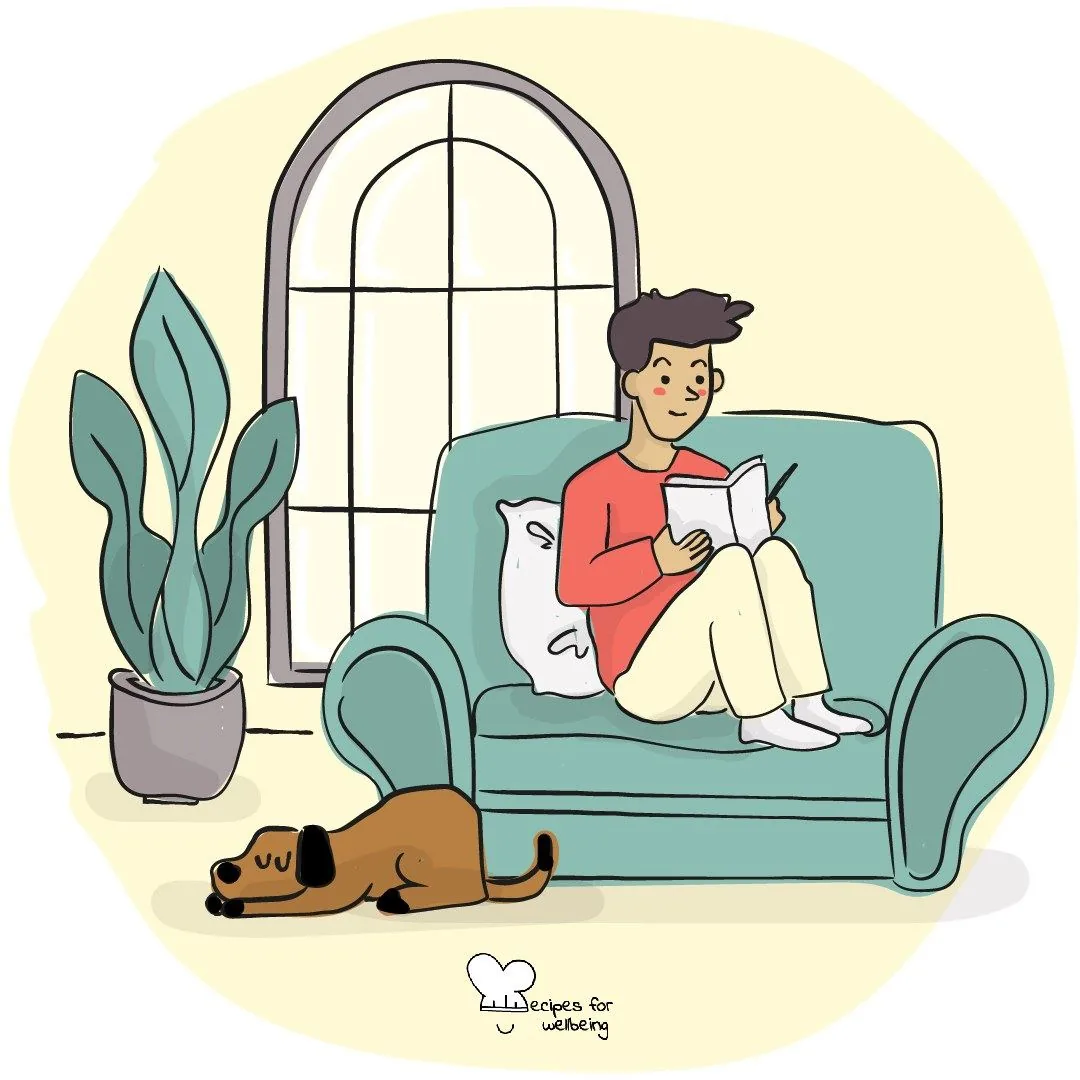
Open this drawing in the library
Why this matters
Grades, applications, followers and public achievements can make ordinary life seem like the space between important events. Yet much of what holds a life is repeated and unremarkable: meals, journeys, familiar places, small kindnesses and time with other people. Ordinariness allows these parts to count without needing to turn them into highlights.
Skill in context Finding beauty and contentment in everyday life, and allowing ordinary experience to have value.
On the skill of ordinarinessTry the interactive practiceTry it yourself first
“The Same Lunch Again” takes a few quiet minutes, just for you, before you teach it. Nothing you write in it is saved or sent.
Open with “The done list”
5 minUse The done list to notice completed effort beside what remains. Students can count one, two or three items and keep them private.
A to-do list keeps our attention on what remains, so before we leave we are going to notice some of what has already been done.
Count three things you did today on your fingers. Arriving in the room counts, and so does asking a question or making it through something difficult.
Take a moment to recognise the effort behind each one, including anything that other people may not have noticed.
Keep your items private or share one with a neighbour if you would like to.
Listen for For students who cannot find three, offer "I am here" as a possible first item and allow a shorter list. Do not turn the number of items into another measure of productivity.
Teacher explanation
10 minOrdinariness is permission to let a normal day matter. It pushes back against the idea that a person must be exceptional, visible or constantly improving to deserve care and belonging.
Ambition still has a place, and ordinary life is not always comfortable. Achievement is one part of a person, and the repeated, unnoticed parts of a day have value of their own. No one needs to perform being content with less when their needs are not being met.
Questions for the room
- Where does pressure to be exceptional come from?
- What might highlight culture do to the way a normal day is experienced?
- Which ordinary parts of life deserve more care from schools and communities?
The ordinary gallery
18 min- Give each student two or three slips and invite general examples of ordinary moments that make life feel comfortable, interesting or connected.
- Offer examples such as a familiar route, a warm drink, a song arriving at the right time or someone making space at a table.
- Keep slips unsigned and free of private or identifying detail.
- Groups read their slips without ranking them, then choose three that many kinds of people might recognise.
- Build a shared wall and read it quietly, noticing both common ground and different needs.
- Ask which ordinary experience people your age are encouraged to overlook, and what would help it receive more care.
Private reflection
6 minWhat ordinary part of a normal day would you quietly miss if it disappeared? You do not need to explain or share it.
How they reflect Private journal
Closing
3 minSome days will hold milestones, while many will not. An ordinary day is part of the life those achievements sit in, and it counts too.
Safeguarding
Keep examples general and reflections private. Do not use ordinariness to minimise poverty, discrimination, unmet needs or a student's desire for change. Follow up privately if an anonymous slip or conversation raises concern.
If something a young person says gives you concern, follow your setting’s usual safeguarding route. This is not yours to carry alone.
Adapting it
In other settings
Take this lesson with you
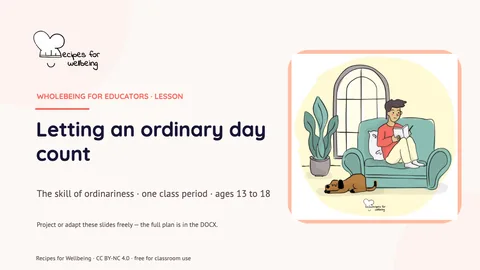
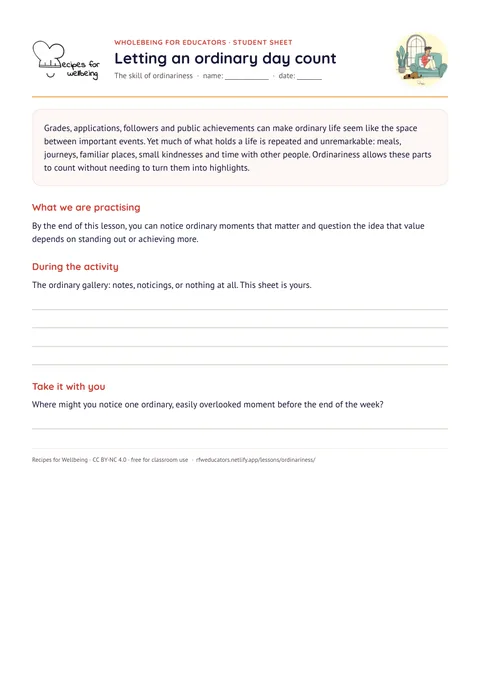
The plan is editable, so you can change the names, the examples and the timings to fit the young people in front of you.
To teach
For students
Your email opens with this lesson named in the subject, and nothing is sent until you send it. A person reads these.
Or write to info@recipesforwellbeing.org