
A pause you carry with you
Learning intention By the end of this lesson, students can try a simple breathing pattern and explain that changing the pace of the breath may help some people settle.
- Time
- 40 minutes
- How the room works
- Small groups
- You need
- Paper and pens, although finger tracing also works
- Opens with
- Four, seven, eight
Before you start
Focusing on or holding the breath can feel uncomfortable for students with asthma, anxiety, trauma or other health needs. Offer ordinary breathing, quiet tracing or observation throughout, and stop immediately if anyone feels dizzy or distressed.
Read the full safeguarding note Adapting it for your class A note home for this lesson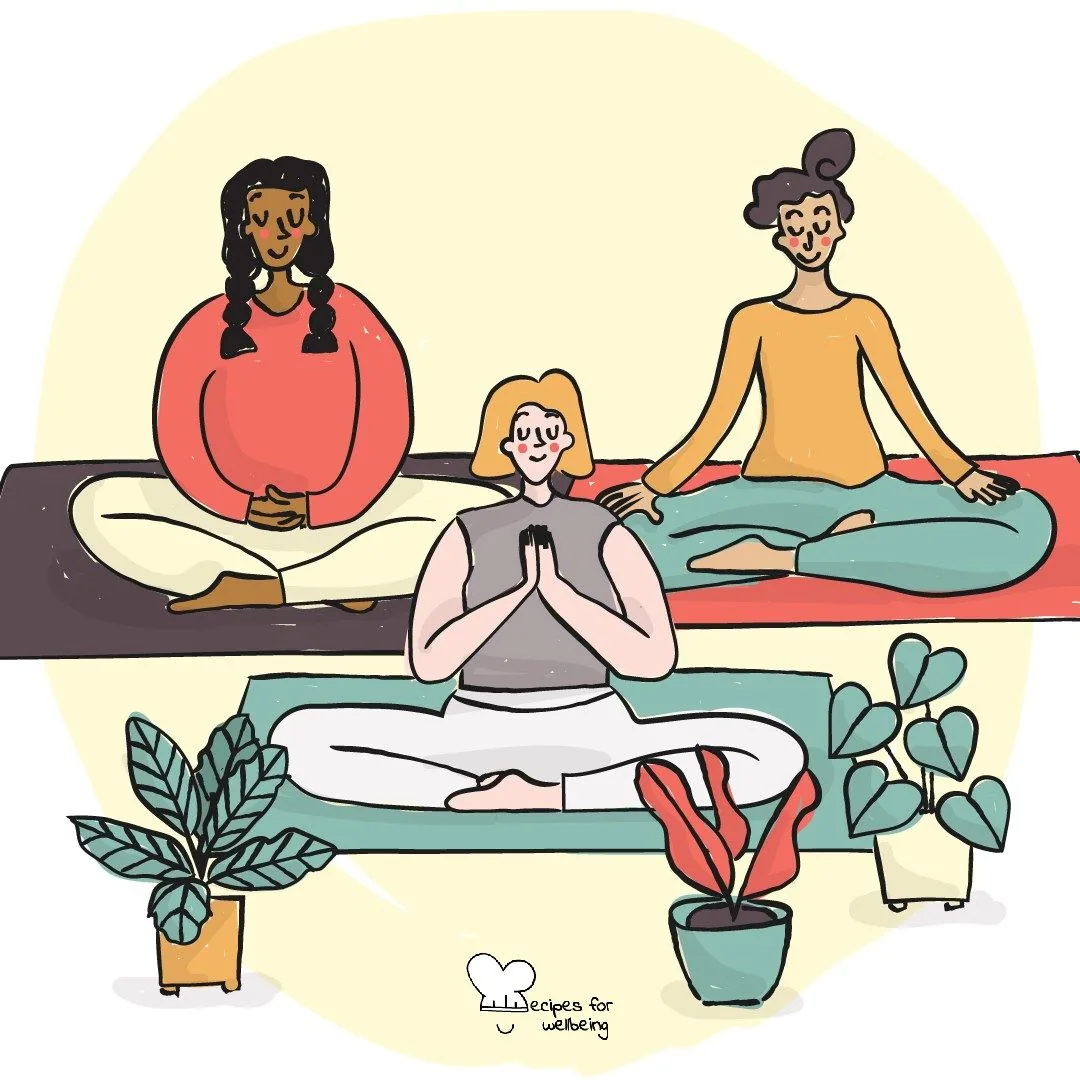
Open this drawing in the library
Why this matters
The breath is always present, although most of the time we do not notice it. Paying attention to its pace can create a small pause during pressure, before a test or after a difficult moment. Breath practices do not work in the same way for everyone, so this lesson offers options rather than a single correct technique.
Skill in context Using the breath as one way to return to the present moment and connect with yourself.
On the skill of breathingTry the interactive practiceTry it yourself first
“One Rhythm You Can Steer” takes a few quiet minutes, just for you, before you teach it. Nothing you write in it is saved or sent.
Open with “Four, seven, eight”
5 minOffer the Four, seven, eight card as one option, alongside breathing normally or watching the count without joining in. Students can shorten or remove the hold at any point.
We are going to try a counted breath, and you can breathe normally or simply listen if focusing on the breath does not feel comfortable today.
If you are joining in, breathe in gently for four, pause for up to seven, and breathe out slowly for up to eight. The counts are guides, so shorten them or leave out the pause whenever you need to.
We will try three more rounds at an easy pace, without forcing the breath to become deeper than it wants to be.
Return to your usual breathing and notice what the practice was like for you, including if it made no difference or was not comfortable.
Listen for Watch for discomfort, dizziness or breath-holding that feels strained, and remind students that returning to an ordinary breath is part of the practice.
Teacher explanation
10 minBreathing mostly happens without our attention, but we can also notice and gently change its rhythm. For some people, a comfortable out-breath that is slightly longer than the in-breath can support settling. It is not a test of control, and a bigger or slower breath is not always better.
Breathing cannot remove the source of stress, and it should not be used to ask someone to tolerate an unsafe situation. It can offer a brief pause in which we notice what is happening and decide what support or action is needed next.
Questions for the room
- What can make a breathing practice feel supportive, uncomfortable or distracting?
- Why is it useful to have more than one way of pausing?
- Where might a brief breath practice help, and where would practical action or another person's support matter more?
Draw your breath
16 min- Invite each student to draw a simple continuous shape they can trace with one finger, such as a square, triangle, wave or circle.
- Demonstrate on a square: trace one side while breathing in, the next while pausing if comfortable, the third while breathing out, and the last while resting.
- Give students three quiet rounds with their own shape. They can change the pace, remove the hold, breathe normally while tracing or simply look at the shape.
- In groups of three or four, invite each person to show their shape and, if they wish, lead one round using only "in, pause, out, rest".
- Ask groups to discuss which pace felt easiest to follow and why different people may prefer different patterns.
- Invite one willing group to lead a final round, with watching or passing treated as full participation.
Private reflection
6 minWhich version of today's practice felt most usable, including ordinary breathing or not taking part? Note one situation in which it might offer a pause, and one situation in which you would need a different kind of support.
How they reflect Private journal
Closing
3 minThe breath is one possible place to pause, and it will not remove the thing causing pressure. If it gives you a little more room, you can use that room to choose what you need next.
Safeguarding
Focusing on or holding the breath can feel uncomfortable for students with asthma, anxiety, trauma or other health needs. Offer ordinary breathing, quiet tracing or observation throughout, and stop immediately if anyone feels dizzy or distressed. Follow health plans and usual safeguarding procedures.
If something a young person says gives you concern, follow your setting’s usual safeguarding route. This is not yours to carry alone.
Adapting it
In other settings
Take this lesson with you
The plan is editable, so you can change the names, the examples and the timings to fit the young people in front of you.
To teach
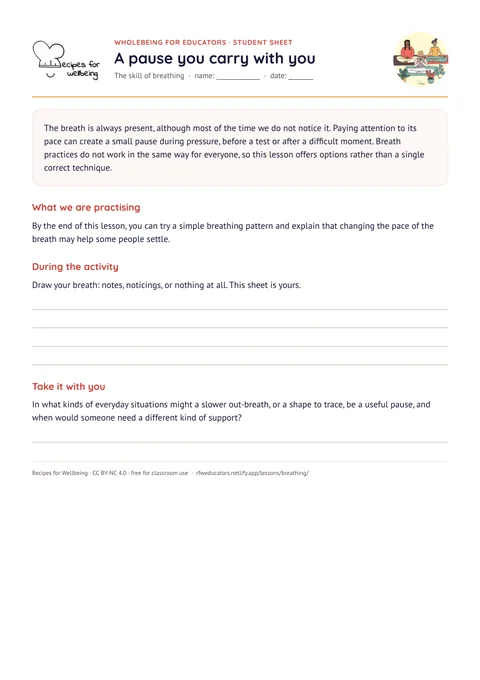
For students
Your email opens with this lesson named in the subject, and nothing is sent until you send it. A person reads these.
Or write to info@recipesforwellbeing.org