
Making a little room
Learning intention By the end of this lesson, students can try several short pauses and describe what a pause may make possible before they respond or continue.
- Time
- 42 minutes
- How the room works
- Whole class, with optional pairs
- You need
- Paper, pens and a teacher-held timer
- Opens with
- Ninety seconds of nothing
Before you start
Stillness, breath focus and closing the eyes can be uncomfortable. Offer movement, ordinary breathing, an open gaze and quiet non-participation.
Read the full safeguarding note Adapting it for your class A note home for this lesson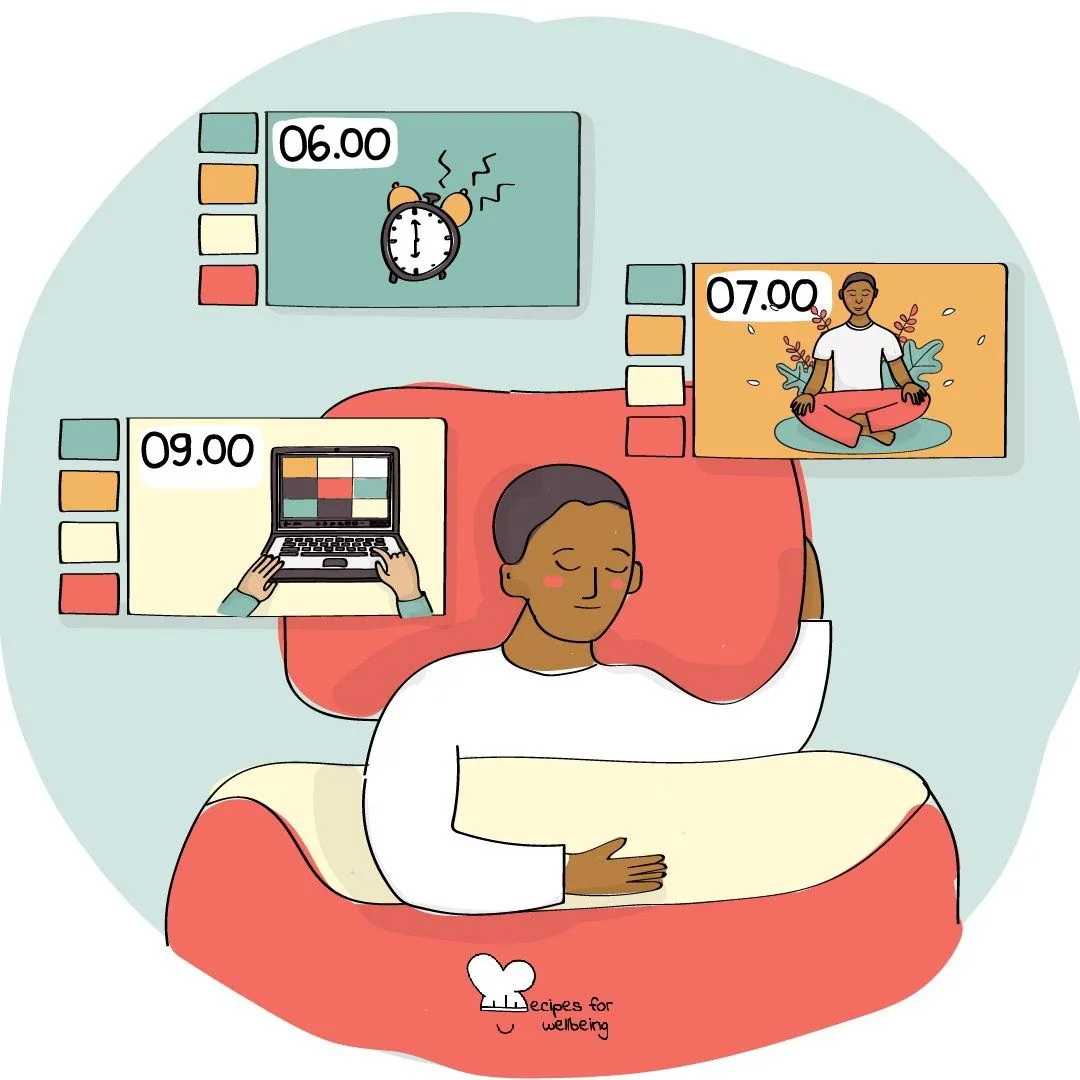
Open this drawing in the library
Why this matters
Many parts of the day arrive without a gap: one lesson follows another, messages ask for replies and a reaction can be expected immediately. A pause offers a small space in which nothing needs to be produced and the next response does not have to be automatic. The pressure around us stays. A pause may still give us time to notice what is needed.
Skill in context Building small breaks into the day for rest, attention and choice.
On the skill of pausingTry the interactive practiceTry it yourself first
“Let the Day Catch Up” takes a few quiet minutes, just for you, before you teach it. Nothing you write in it is saved or sent.
Open with “Ninety seconds of nothing”
5 minUse Ninety seconds of nothing while keeping eyes open and movement available. Nothing will be requested or collected at the end.
For the next 90 seconds, there is nothing you need to produce and nothing you will be asked to show afterwards.
Let your eyes rest where they feel comfortable and allow your body to sit, shift or move as needed.
Your mind may call this pointless or remind you of something else, and you can notice the thought without following it.
I will keep the time so that you do not have to. We begin now.
Listen for Fidgeting and discomfort may remain, and this is not a problem to correct. Do not claim that restlessness will pass or that stillness means the student is settled.
Teacher explanation
10 minA pause can be brief: looking away from a screen, feeling contact with the floor, taking an ordinary breath or waiting before replying. Its value does not depend on helping us work faster afterwards.
A pause may also create choice between an event and a response. It does not make every reaction controllable, and people need different amounts of time and support. When a situation is unsafe, pausing should lead towards protection and help rather than greater tolerance of harm.
Questions for the room
- Where does the day leave little room between one demand and the next?
- Why can stopping feel uncomfortable or undeserved?
- When might a pause help before replying, and when is immediate action needed?
A menu of pauses
18 min- Explain that the class will try three pauses, with watching, adapting or passing available throughout.
- First, trace a square while breathing at a comfortable pace. Students may remove every hold or trace while breathing normally.
- Second, let the eyes look towards a distant point or close briefly if that feels safe. Avoid pressing or covering the eyes.
- Third, place pens and devices down if possible and notice three sounds, or three visual details if sound is uncomfortable.
- Students privately record which pauses felt usable, unusable or worth adapting, and where a minute may be possible.
- Gather techniques rather than personal reactions, while noting that access to a pause also depends on timetables, spaces and adult expectations.
Private reflection
6 minIf you had one minute tomorrow in which nothing needed to be completed, where might it fit and what kind of pause would feel possible there?
How they reflect Private journal
Closing
3 minA pause does not need to be long or productive to count. It can simply be a small piece of room before the day continues.
Safeguarding
Stillness, breath focus and closing the eyes can be uncomfortable. Offer movement, ordinary breathing, an open gaze and quiet non-participation. Keep all sharing about techniques, and follow usual pastoral procedures if a student becomes distressed.
If something a young person says gives you concern, follow your setting’s usual safeguarding route. This is not yours to carry alone.
Adapting it
In other settings
Take this lesson with you
The plan is editable, so you can change the names, the examples and the timings to fit the young people in front of you.
To teach
For students
Your email opens with this lesson named in the subject, and nothing is sent until you send it. A person reads these.
Or write to info@recipesforwellbeing.org