
Keeping the flow going both ways
Learning intention By the end of this lesson, students can identify one-way and reciprocal patterns, and suggest a change that meets a need without leaving another person or system depleted.
- Time
- 40 minutes
- How the room works
- Groups of four or five
- You need
- Paper and pens; fictional scenarios
- Opens with
- Giving and receiving
Before you start
Keep scenarios fictional and do not invite disclosure about family finances, friendship exploitation or care responsibilities. Avoid suggesting that students owe access, affection or forgiveness.
Read the full safeguarding note Adapting it for your class A note home for this lesson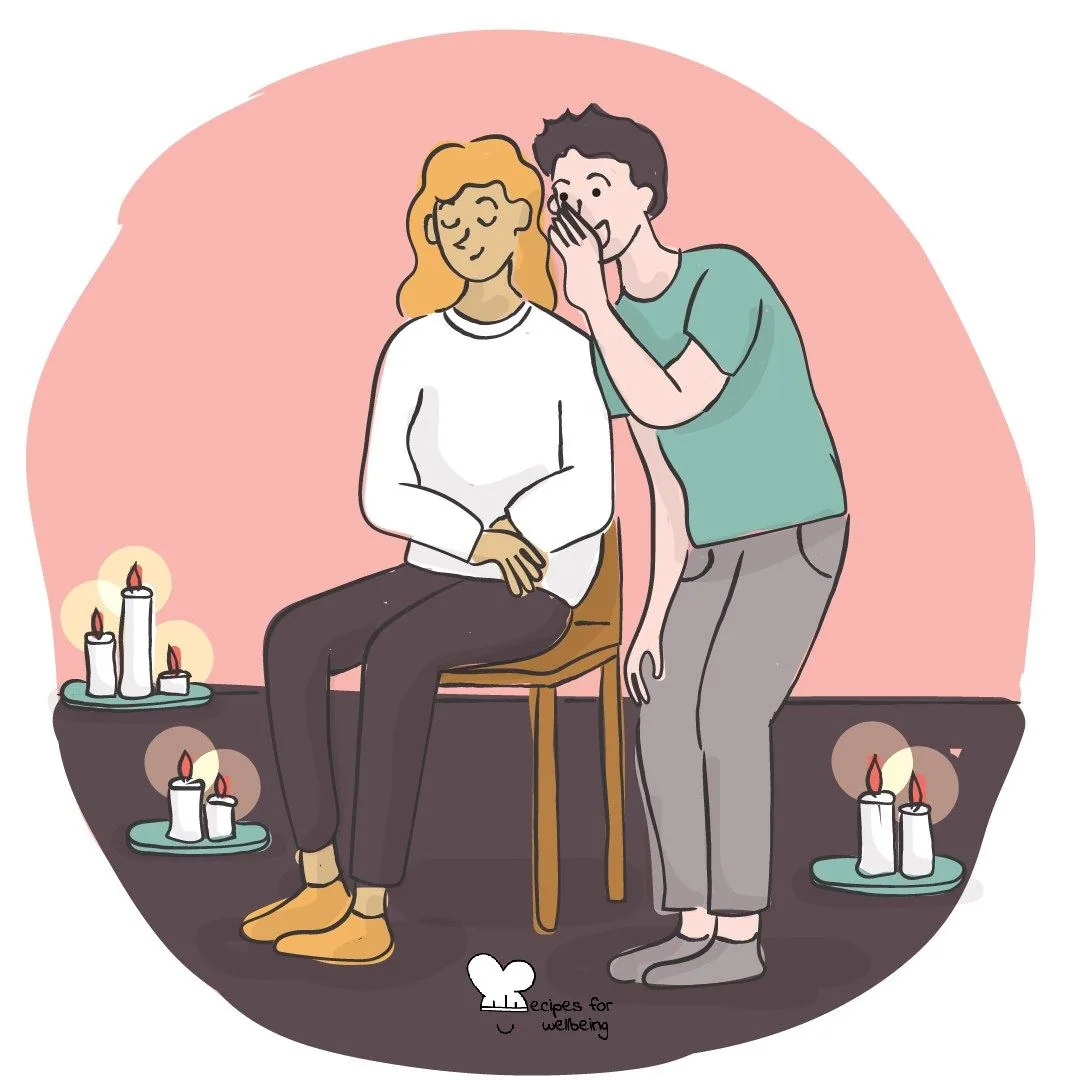
Open this drawing in the library
Why this matters
Friendships, teams, shared spaces and living systems depend on movement in more than one direction. Reciprocity asks what we receive, what we return and whether the arrangement remains fair over time. Nobody is asked to give endlessly. Limits and rest are part of what keeps a relationship going.
Skill in context Meeting needs in ways that regenerate rather than deplete, and giving back rather than only taking away.
On the skill of non-extractingTry the interactive practiceTry it yourself first
“Fuller Than You Found It” takes a few quiet minutes, just for you, before you teach it. Nothing you write in it is saved or sent.
Open with “Giving and receiving”
5 minUse Giving and receiving with appreciation limited to observable, appropriate behaviour. Students may appreciate the group, listen or pass.
We often practise giving, while receiving can take a different kind of attention.
Think of one true and specific appreciation for the person beside you based on something you observed in class, or choose an appreciation for the group as a whole.
Offer it in one sentence if you would like to. The receiver only needs to say "thank you", and passing is available to both people.
Swap roles, then notice privately which part felt more familiar.
Listen for Keep comments away from appearance, popularity and private knowledge. Do not require paired appreciation where relationships in the room make it unsafe or insincere.
Teacher explanation
10 minReciprocity describes a flow in which receiving and contributing can continue over time. It does not require an exact exchange in every moment; people bring different needs and resources, and care is not a debt to be repaid immediately.
Problems arise when one person, community or ecosystem is expected to keep giving while others take without acknowledgement, repair or limit. A reciprocal response asks how a need can be met without quietly moving the cost onto someone with less power.
Questions for the room
- What makes an exchange reciprocal even when both sides do not give the same thing?
- How can a group notice when one person is carrying too much?
- What is the difference between reciprocity and keeping score?
Redesign the flow
16 min- Offer fictional one-way flows, such as one person organising every group chat, a shared fridge never being restocked, a student contacted only for notes or an app taking attention without supporting a stopping point.
- Groups choose two scenarios and identify what is being received, who supplies it and where the hidden cost sits.
- Redesign one scenario so the need can still be met while responsibility, acknowledgement or resources move more fairly.
- Include a boundary for the person or system that has been giving too much.
- Summarise the redesign in one sentence: "Instead of..., the group could..., so that..."
- Share the recipes and test whether each redesign asks the least powerful person to do even more work.
Private reflection
6 minThink of an everyday flow you are part of without naming anyone. What could put something back, and what boundary would keep the exchange from becoming draining?
How they reflect Private journal
Closing
3 minReciprocity means noticing the flow and sharing the load, so that care can keep going. No one has to give until nothing remains.
Safeguarding
Keep scenarios fictional and do not invite disclosure about family finances, friendship exploitation or care responsibilities. Avoid suggesting that students owe access, affection or forgiveness. Follow safeguarding and pastoral routes if a real pattern of coercion or deprivation is disclosed.
If something a young person says gives you concern, follow your setting’s usual safeguarding route. This is not yours to carry alone.
Adapting it
In other settings
Take this lesson with you
The plan is editable, so you can change the names, the examples and the timings to fit the young people in front of you.
To teach
For students
Your email opens with this lesson named in the subject, and nothing is sent until you send it. A person reads these.
Or write to info@recipesforwellbeing.org