
Belonging to the living world
Learning intention By the end of this lesson, students can observe one living thing closely and describe a way its life is connected with their own.
- Time
- 40 minutes
- How the room works
- Groups of three or four
- You need
- A living thing to observe, a view, or photo cards; paper and pens
- Opens with
- One sign of spring
Before you start
Nature and climate discussion can bring grief, fear or experiences of unsafe environments. Do not require calm, hope or personal testimony.
Read the full safeguarding note Adapting it for your class A note home for this lesson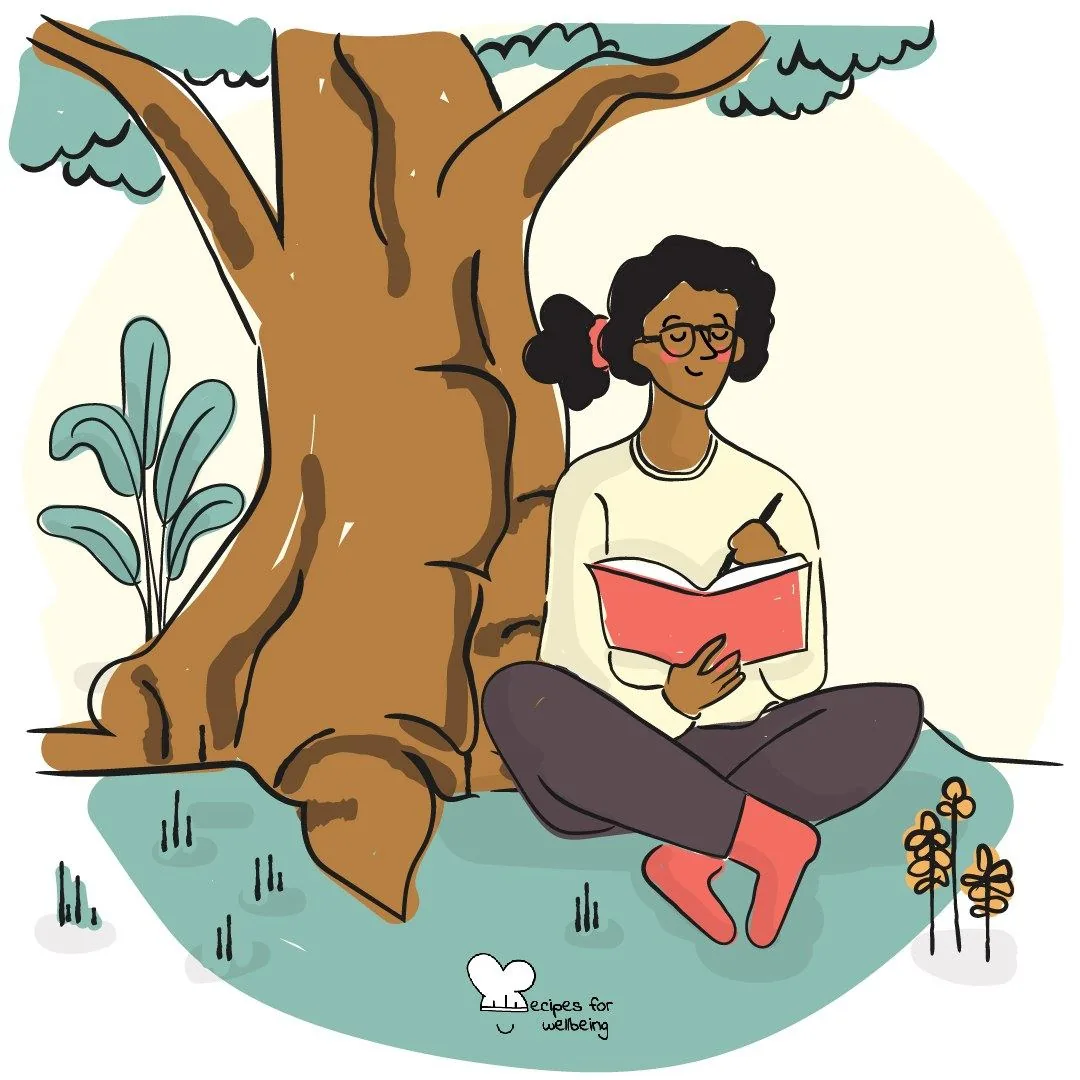
Open this drawing in the library
Why this matters
The living world continues within and around busy school days, even when our attention is elsewhere. Noticing one living thing can remind us that human life depends on wider relationships with air, water, soil, plants and other species. Connection does not require access to a dramatic landscape; it can begin with what is already nearby.
Skill in context Developing an empathetic relationship with the natural world and recognising our interdependence with life on Earth.
On the skill of nature kinshipTry the interactive practiceTry it yourself first
“A Letter to Old Kin” takes a few quiet minutes, just for you, before you teach it. Nothing you write in it is saved or sent.
Open with “One sign of spring”
5 minUse One sign of spring as seasonal noticing, adapting the season and local signs to where the class is. Students can use memory, the view outside or a picture.
The season is changing around us, whether the signs are obvious or easy to miss.
Find one sign you have noticed recently, or look through the window for one now.
Hold the detail in mind for a moment without asking it to mean anything more.
If you would like to, offer your sign in three words or fewer. Passing is welcome.
Listen for Accept signs from urban, indoor and imagined environments, and do not assume that nature feels safe or calming to everyone.
Teacher explanation
10 minNature sensitivity means recognising the living world as a relationship rather than scenery. We are not separate observers: our food, breath, water, shelter and climate are held within wider living systems.
This does not require romanticising nature. The living world includes competition, decay, danger and change as well as beauty and care. Closer attention can deepen connection while leaving room for grief, fear, responsibility and the unequal access people have to healthy environments.
Questions for the room
- Where does the living world appear in an ordinary day, including in cities and indoors?
- What changes when people speak of belonging to nature instead of visiting it?
- Who has access to clean, safe and biodiverse spaces, and who is responsible for that access?
Meet one living thing
18 min- Give each group one nearby or pictured living thing, such as a tree, bird, insect, moss or classroom plant.
- Spend two quiet minutes observing colour, shape, movement, surroundings and change. Separate what can be observed from what is imagined.
- Create a short profile of what the organism may need, what relationships sustain it and what it contributes to its surroundings.
- Trace one connection between its life and human life, avoiding claims the group cannot support.
- As a creative option, write one or two lines the living thing might say to the school or city, clearly naming this as imagination.
- Share one observation or connection from each group and collect questions that remain.
Private reflection
5 minWhat is one small and possible way to remain in contact with the living world during a busy day, and what conditions would make that easier?
How they reflect Private journal
Closing
2 minThe living world does not begin at the edge of a city or a school. It is already part of the air, water, food and relationships that hold this day.
Safeguarding
Nature and climate discussion can bring grief, fear or experiences of unsafe environments. Do not require calm, hope or personal testimony. Receive concern without pressing for detail and follow usual pastoral or safeguarding routes when needed.
If something a young person says gives you concern, follow your setting’s usual safeguarding route. This is not yours to carry alone.
Adapting it
In other settings
Take this lesson with you
The plan is editable, so you can change the names, the examples and the timings to fit the young people in front of you.
To teach
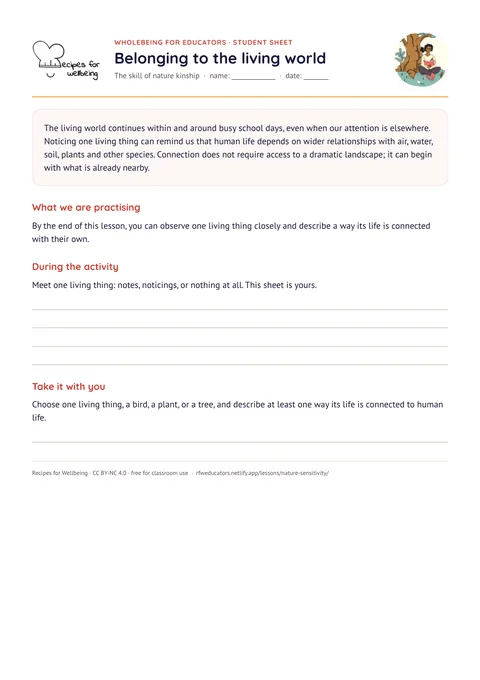
For students
Your email opens with this lesson named in the subject, and nothing is sent until you send it. A person reads these.
Or write to info@recipesforwellbeing.org