
Staying with an ordinary hard moment
Learning intention By the end of this lesson, students can describe an ordinary difficult feeling as something that can change over time and identify a safe way to stay present without making the moment worse.
This classroom lesson is the base for session 7 of Ten sessions for advocates.
- Time
- 42 minutes
- How the room works
- Groups of three or four
- You need
- Paper, pens and fictional low-stakes scenarios
- Opens with
- Befriending the wobble
Before you start
This lesson is only for everyday distress such as nerves, embarrassment, restlessness and minor disappointment. Do not use it for self-harm, abuse, bereavement, panic, crisis or any situation in which a student may be unsafe.
Read the full safeguarding note Adapting it for your class A note home for this lesson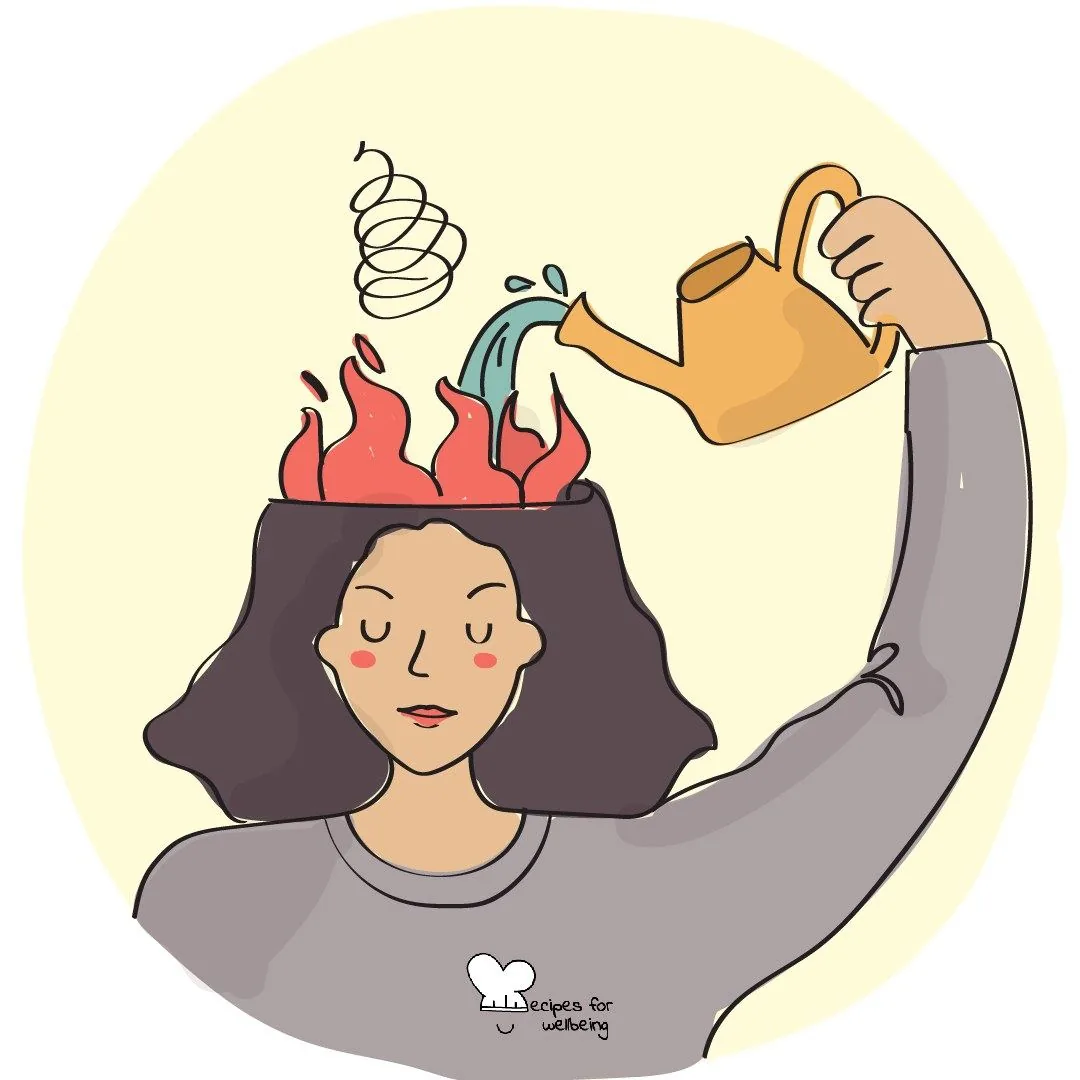
Open this drawing in the library
Why this matters
Nerves, embarrassment, restlessness and disappointment can create a strong wish to escape immediately. Distress tolerance is the ability to move through an ordinary hard moment without demanding that the feeling disappear first. It is not endurance of danger, abuse or overwhelming distress, and it includes asking for help or stepping away.
Skill in context Moving through adversity and setbacks with personal resources and support from other people.
On the skill of resilienceTry the interactive practiceTry it yourself first
“Stars That Held You” takes a few quiet minutes, just for you, before you teach it. Nothing you write in it is saved or sent.
Open with “Befriending the wobble”
5 minUse Befriending the wobble only for everyday, low-intensity discomfort. Students may focus on a fictional situation, an external object or the room instead of their own body.
Bring to mind a fictional student waiting for something ordinary but uncomfortable, such as a result, a reply or a turn to speak.
Imagine where they might notice the discomfort, while keeping your own attention outside your body if that feels better.
Ask what the feeling may be signalling and what would help the person remain safe while time moves.
Nothing needs to be fixed in this minute, and seeking support or stepping away can be part of staying with the moment.
Listen for Keep the example fictional and do not invite students to reveal their own distress. If anyone appears affected, offer an immediate external focus and a quiet route out.
Teacher explanation
10 minSome feelings change in intensity over minutes or hours, although they do not follow one predictable wave or timetable. Distress tolerance means reducing the chance of making an ordinary hard moment more harmful while we wait, act or seek support.
The skill is not "put up with it." Safety comes first, and leaving, contacting someone, using a health plan or getting professional help may be the right response. Distraction can also be a wise short-term choice; the question is whether it helps the person move through the moment safely or keeps a larger problem hidden and unsupported.
Questions for the room
- What do people commonly do when they want an uncomfortable feeling to stop at once?
- How can someone distinguish a manageable hard moment from one that needs immediate help?
- When can distraction, company or leaving be a caring response?
Chart a changing feeling
18 min- Explain that feelings can rise, level, return or ease in different ways; draw several possible shapes rather than one guaranteed wave.
- Give each group a fictional ordinary situation, such as waiting outside an office, feeling embarrassed after a small mistake or waiting for a routine reply.
- Sketch how the feeling might change over the next hour, allowing uncertainty and more than one possibility.
- At the most difficult point, add three options: something the character can do alone, support from another person and a way to step away or get help.
- Mark any response that could make the situation less safe, then revise it without judging the impulse behind it.
- Each group shares one supportive option and one sign that the character needs more help than this lesson can offer.
Private reflection
6 minWithout recording the event, think of a small and ordinary difficult feeling you have moved through before. What helped, and how did you know whether you could stay with it or needed support?
How they reflect Private journal
Closing
3 minA hard moment does not need to become a lesson or a positive story. We can meet what is here, use support and let safety guide whether we stay, step away or ask someone to help.
Safeguarding
This lesson is only for everyday distress such as nerves, embarrassment, restlessness and minor disappointment. Do not use it for self-harm, abuse, bereavement, panic, crisis or any situation in which a student may be unsafe. All group work remains fictional and passing is always available. If a comment or response suggests something more serious, do not process it in the lesson. Stay warm, help the student move to a safer setting and follow the school's safeguarding or clinical escalation route on the same day. If there is immediate risk, use emergency procedures.
If something a young person says gives you concern, follow your setting’s usual safeguarding route. This is not yours to carry alone.
Adapting it
In other settings
Take this lesson with you
The plan is editable, so you can change the names, the examples and the timings to fit the young people in front of you.
To teach
For students
Your email opens with this lesson named in the subject, and nothing is sent until you send it. A person reads these.
Or write to info@recipesforwellbeing.org