The full stop
Adult wording. Show the classroom wording
Card 41 of 52
Put it on the board and read it out. Nothing to prepare.
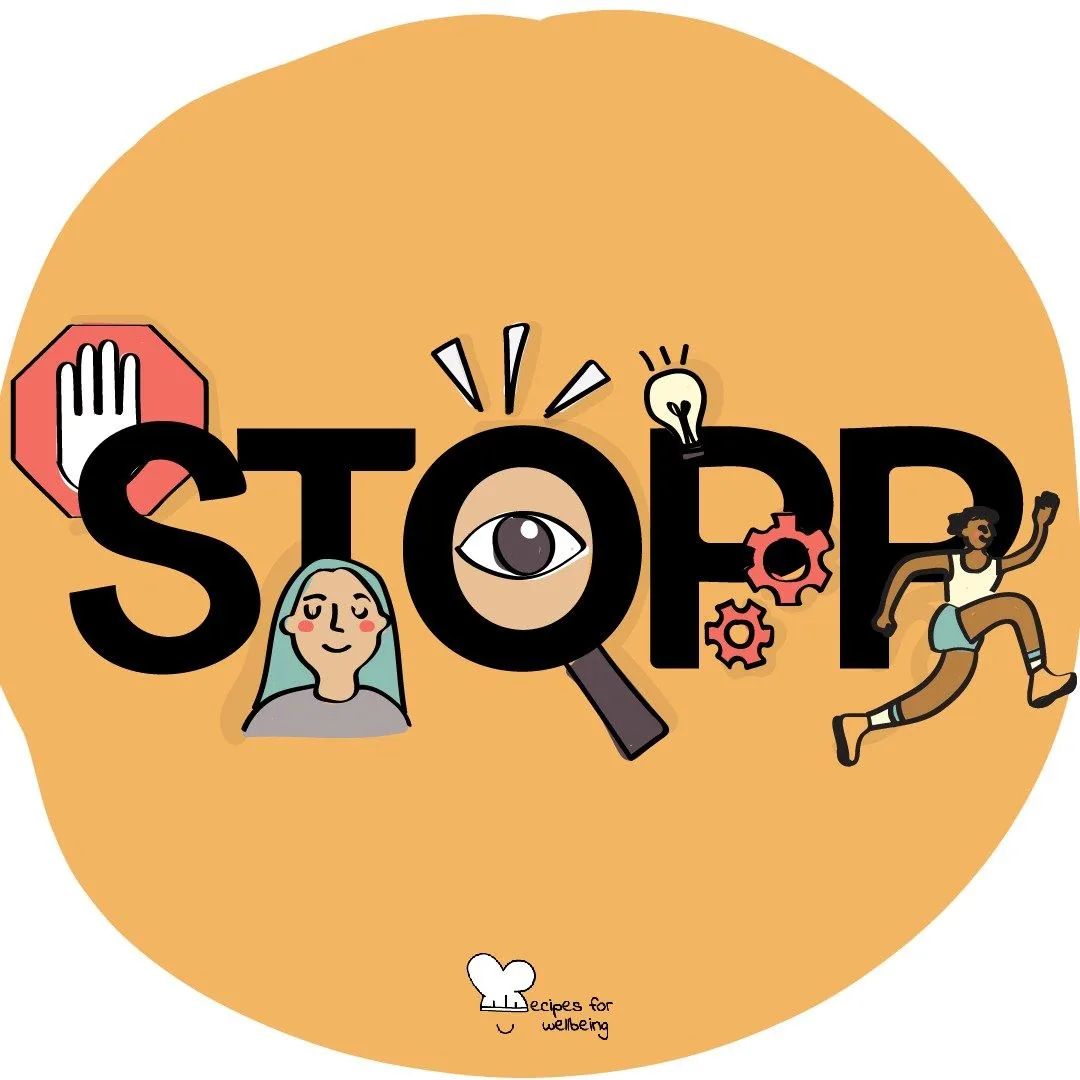
Exam season can make everything feel faster, so today we will practise a short pause called STOPP that you can use anywhere.
S means stop where you are. T means take one comfortable breath, with an unhurried out-breath.
O means observe what is moving through your mind. You might name it quietly as planning, worrying or replaying.
The first P means pull back: picture the moment from another place or time, and notice whether your view of it changes.
The last P means proceed, choosing what to do next. You can use the pause in an exam, an argument or any moment you need a little room.
That’s the practice.
Listen for Leave time after "observe" for students to notice a thought. Stillness does not mean the practice has landed.
The skill of relaxation. Consciously releasing tension from the mind and body to reach a state of calm and comfort.
What is your relationship with relaxation? Which forms of rest do you tend to neglect when you most need to steady yourself?
Busy weeks can make everything feel faster, so we will practise a short pause called STOPP that you can use wherever you are.
S means stop where you are. T means take one comfortable breath, with an unhurried out-breath.
O means observe what is moving through your mind. You might name it quietly as planning, worrying or replaying.
The first P means pull back: picture the moment from another place or time, and notice whether your view of it changes. If that makes things feel unreal, skip it and look at what is in the room.
The last P means proceed, choosing what to do next. You can use it in a meeting, before replying to a message or anywhere you need a little room.
That’s the practice.
Watch for anyone who goes very still, tearful or far away. Do not single them out. Offer a break, or speak to them quietly afterwards.
The skill of relaxation. Consciously releasing tension from the mind and body to reach a state of calm and comfort.
What is your relationship with relaxation? Which forms of rest do you tend to neglect when you most need to steady yourself?
The skill of relaxation
Consciously releasing tension from the mind and body to reach a state of calm and comfort.
Try it yourself first
“Soften Half a Turn” takes a few quiet minutes, just for you, before you teach it. Nothing you write in it is saved or sent.
Adapting it
If you have longer
There is a full lesson on this skill, about 40 minutes.
Your email opens with this card named in the subject, and nothing is sent until you send it. A person reads these.
Or write to info@recipesforwellbeing.org