
Four, seven, eight
Adult wording. Show the classroom wording
Card 15 of 52
Put it on the board and read it out. Nothing to prepare.
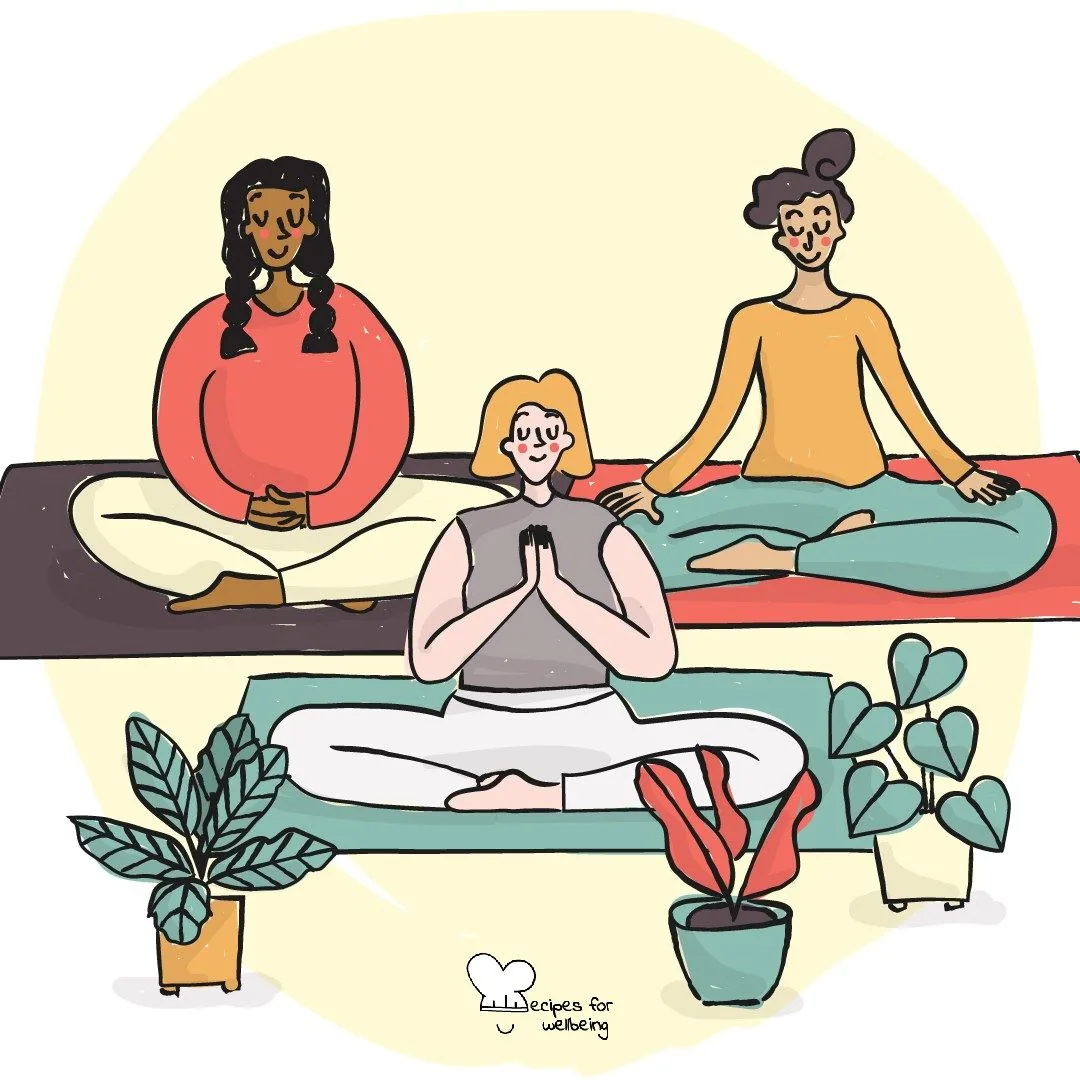
On a busy morning, counting the breath gives your attention one place to rest. You can follow the pattern, shorten any count or breathe as you usually do.
Breathe in through your nose for a count of four, hold gently for seven if that is comfortable, and breathe out through your mouth for eight as though you were softly fogging a window.
The counts are only a guide. Make them shorter, go back to normal breathing or just watch if holding your breath does not suit you.
Carry on for three more rounds at your own pace while I keep the room quiet.
Together: One Rhythm You Can Steer
Breathe at your own pace, or just watch. Stop any time.
The practice starts on its own button: tap it, or press Enter. The arrow keys still move between steps.
That’s the practice.
On your own, any time: “One Rhythm You Can Steer”, at recipesforwellbeing.org/framework
Listen for Breathing may be quiet or audible. Students who shorten the pattern or breathe normally are still taking part.
The skill of breathing. Using the breath to come into the present moment and connect with yourself.
What is your relationship with your breath? How might making breathing a more intentional part of each day support your wellbeing?
When a day is busy, counting the breath can give your attention one place to rest. You can follow the pattern, shorten any count or simply breathe as usual.
Breathe in through your nose for four, hold gently for seven if that is comfortable, and breathe out through your mouth for eight.
The counts are a guide. Shorten them, go back to ordinary breathing or simply watch if holding your breath does not suit you.
Carry on for three more rounds at your own pace while I keep the time.
Together: One Rhythm You Can Steer
Breathe at your own pace, or just watch. Stop any time.
The practice starts on its own button: tap it, or press Enter. The arrow keys still move between steps.
That’s the practice.
On your own, any time: “One Rhythm You Can Steer”, at recipesforwellbeing.org/framework
Watch for anyone who goes very still, tearful or far away. Do not single them out. Offer a break, or speak to them quietly afterwards.
The skill of breathing. Using the breath to come into the present moment and connect with yourself.
What is your relationship with your breath? How might making breathing a more intentional part of each day support your wellbeing?
The skill of breathing
Using the breath to come into the present moment and connect with yourself.
Try it yourself first
“One Rhythm You Can Steer” takes a few quiet minutes, just for you, before you teach it. Nothing you write in it is saved or sent.
Adapting it
Your email opens with this card named in the subject, and nothing is sent until you send it. A person reads these.
Or write to info@recipesforwellbeing.org